
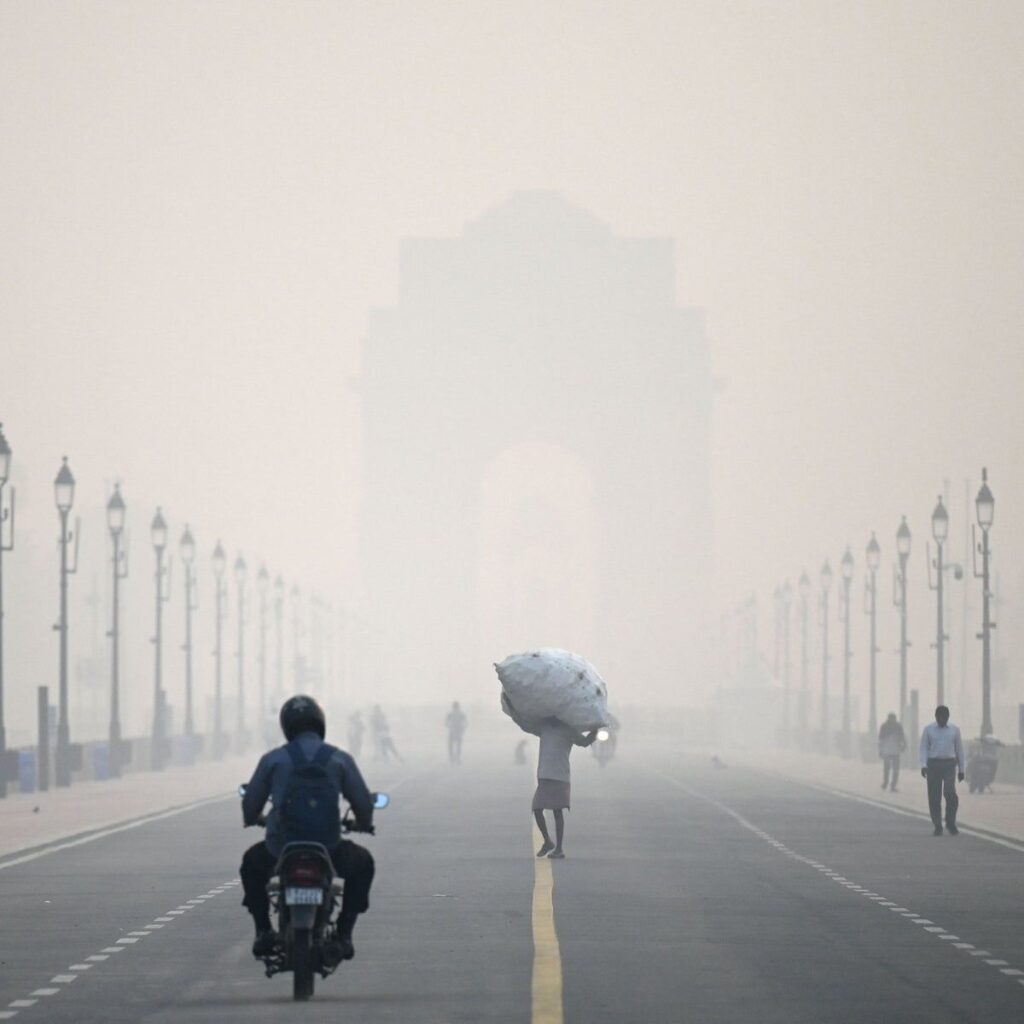
Delhi, India’s bustling capital, is a city of contrasts — historic monuments, modern skyscrapers, and streets teeming with life. Yet, amidst its vibrancy, the city struggles with a persistent, invisible threat: pollution. Each winter, Delhi often becomes synonymous with smog, poor air quality, and health warnings. But what exactly fuels this crisis, and what does it mean for the millions living here?
The Roots of Delhi’s Air Pollution
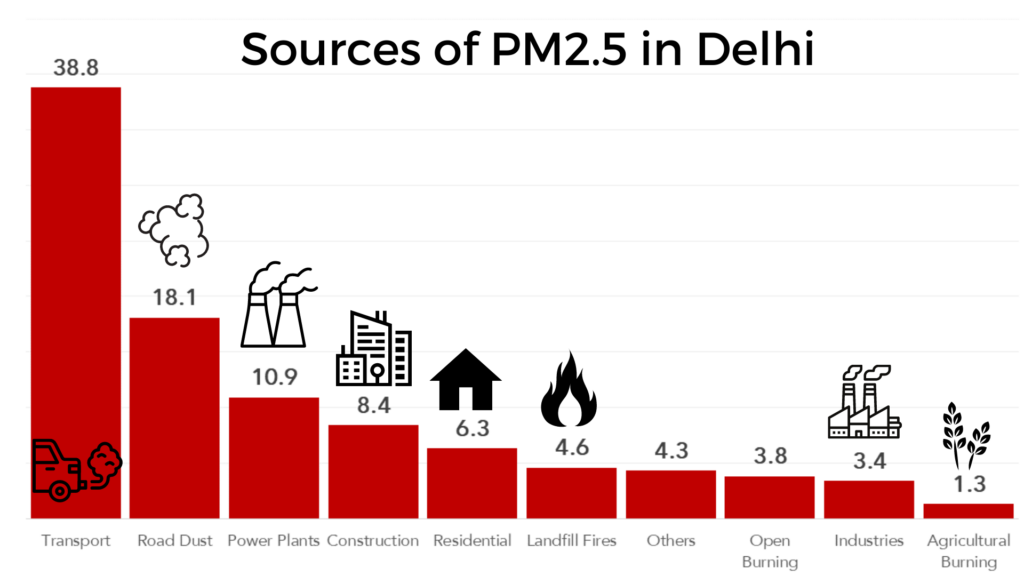
Delhi’s pollution is not a single problem; it’s a complex cocktail of sources that converge to create hazardous air quality:
1. Vehicular Emissions: With over 10 million vehicles on its roads, Delhi contributes significantly to nitrogen oxide (NOx) and particulate matter (PM) pollution. Old vehicles and diesel engines exacerbate the problem.
2. Industrial Activity: Factories in and around Delhi emit large quantities of smoke and dust. Despite regulations, many small-scale industries lack proper pollution control systems.
3. Construction Dust: The city’s rapid urbanization has led to constant construction. Dust from building sites adds fine particles (PM2.5) that penetrate deep into the lungs.
4. Crop Burning in Neighboring States: Every winter, farmers in Punjab and Haryana burn crop residues. Winds carry this smoke to Delhi, forming dense smog layers.
5. Household Pollution: Traditional cooking methods, particularly in low-income neighborhoods using wood or coal, contribute to indoor and outdoor air pollution.
The Health Impact
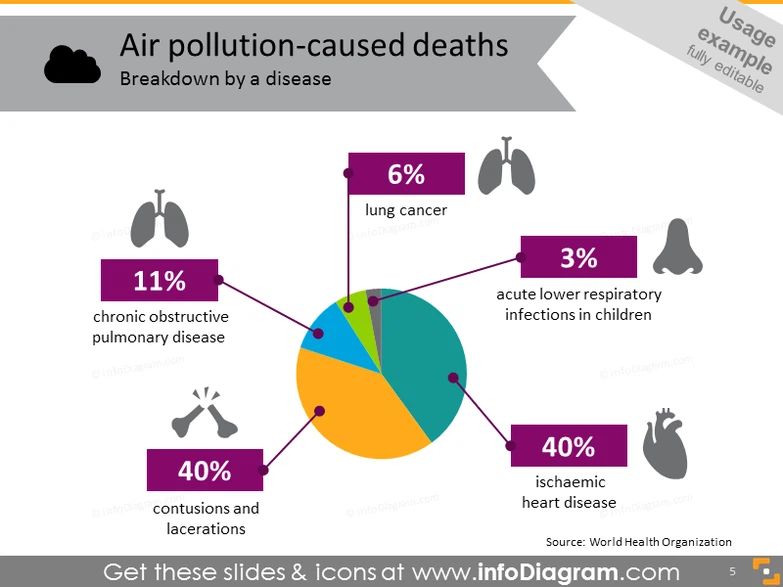
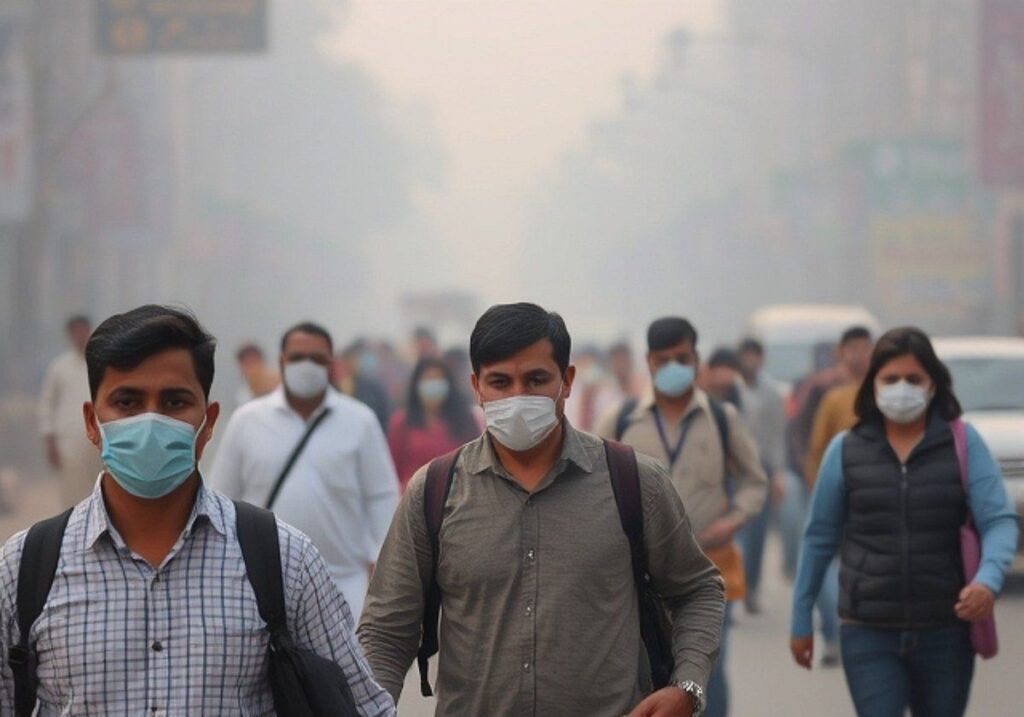
The air quality index (AQI) in Delhi often exceeds 300 in winter — classified as “hazardous.” Long-term exposure can lead to chronic respiratory diseases, cardiovascular issues, and even cognitive impairment. Children, the elderly, and those with pre-existing conditions are particularly vulnerable. Hospitals report a surge in patients with breathing difficulties whenever pollution spikes.
Government Initiatives and Challenges
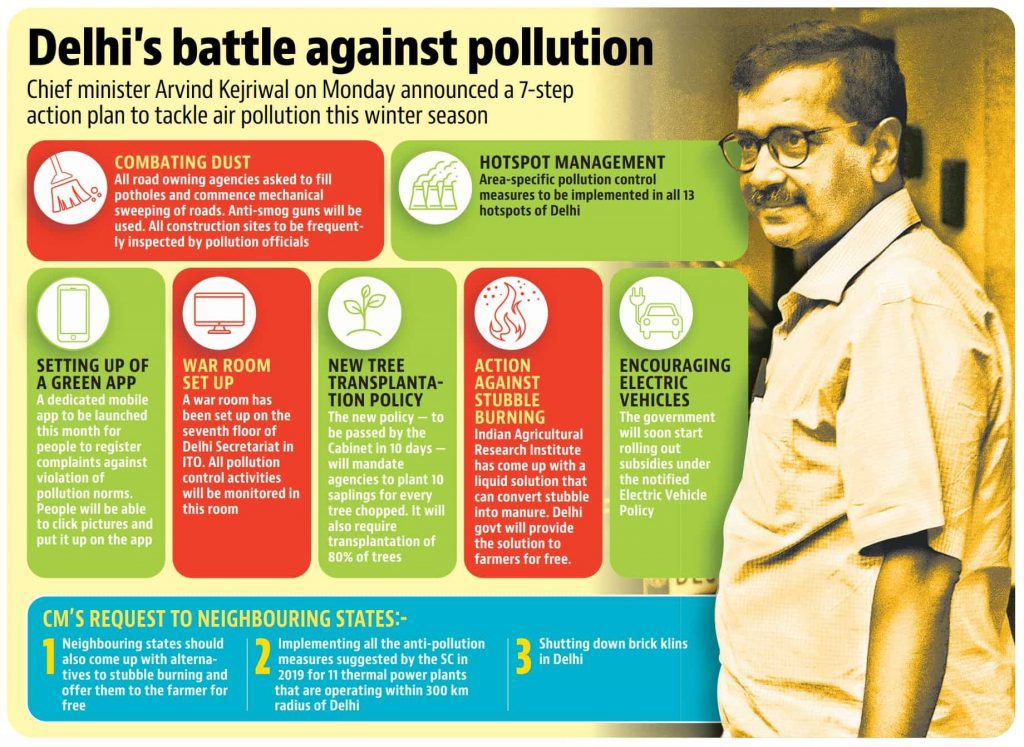
The Delhi government has tried multiple strategies:
- Odd-Even Vehicle Scheme: Restricting vehicles on alternate days to reduce traffic emissions.
- Graded Response Action Plan (GRAP): Implementing emergency measures when AQI reaches critical levels.
- Promoting Electric Vehicles (EVs): Incentives for EV adoption aim to cut vehicular pollution.
- Anti-Crop Burning Measures: Collaborating with neighboring states to reduce residue burning.
Despite these efforts, the city still battles rising pollution levels. Enforcement is inconsistent, and behavioral change among citizens is slow.
Citizens’ Role: Beyond Regulations
While government action is crucial, Delhi’s residents can play a pivotal role:
- Switching to public transport, cycling, or walking where possible.
- Avoiding open burning of waste.
- Using masks or air purifiers during peak
- Advocating for greener policies in their communities.
Looking Ahead
Delhi’s pollution problem is not just an environmental issue—it is a public health emergency. Addressing it requires a combination of stringent regulations, technological innovation, regional cooperation, and conscious citizen behavior.
The silver lining? Awareness is growing. People are now talking about smog mitigation, clean energy, and sustainable urban planning. If these conversations turn into action, Delhi may one day reclaim its skies — allowing its residents to breathe freely, without fear of the invisible smog that clouds their city each winter.